Weissenborn Study #27
Weissenborn Opus 8/2, Study #27 for advanced bassoon students. Comments on perpetuum mobile and perfection vs. excellence; further examples of practicing with sprints.
Comments
Weissenborn Opus 8/2, Study #27 for advanced bassoon students. Comments on perpetuum mobile and perfection vs. excellence; further examples of practicing with sprints. By Terry B. Ewell, Bassoon Digital Professor. BDP #135.
The original transcript is available here.
Videos
Captions are unavailable. The complete transcript follows.
Chapters
Transcript
0:19Introduction: Perpetuum Mobile
Welcome, this is Terry Ewell. As we progress through the Weissenborn advanced studies you will see that more and more of these exercises are devoted to perpetuum mobile, that is, a continuous stream of notes.
0:37Sprints Rather Than Halting Rhythms
Rapid notes such as these are best practiced with sprints and certainly not with short halting rhythms. For instance, the dotted eight and sixteenth note rhythms are largely an ineffective practice method to use here for attaining faster speeds.
0:54Tricky Passage in Lines 1--2
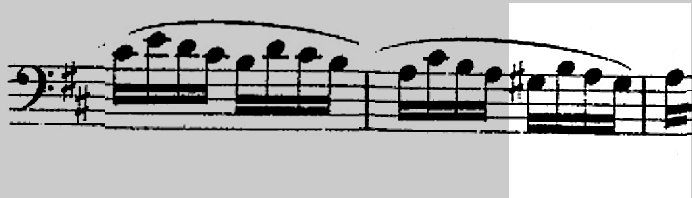
Let's concentrate on the tricky passage in lines 1-2, measures 5-6 of the study.
1:04Sprint Practice by Adding Beats
Sprints starting with the last beat and then adding beats will work well.
 Open full-size figure
1:40Accurate Rhythms in Line 4
In line 4 made certain that the rhythms stay accurate. Too often students rush the 16ths as performed this way:
 Open full-size figure
1:55Perform the Rhythm Accurately
Instead perform it accurately this way:
2:04Double Breaths: Exhale and Inhale
The double breaths indicate places where you should exhale and then inhale. This is done at the beginning of the piece. Later this is done before playing the last three lines. ------------------------------------------------------------------------ # REFLECTION
2:23Reflection: Perfection versus Excellence
When I was a young piano student my teacher often told me that the goal in music was perfection. I believed him and sought to do that for many years.
2:36The Error of Pursuing Perfection
Later, however, I realized the error with that pursuit. Perfection is something that I could never attain. It was a destructive and frustrating goal. This goal was damaging my progress in music and my well-being. I learned little by little that it is not perfection that I should be striving for, but rather excellence. There is a big difference between seeking perfection and seeking excellence.
3:09The Problem with Making a Perfect Video
If I tried to make a perfect video, I would have never completed a single video in this series on the Weissenborn studies. You would have no instruction from me at all! When I look from the vantage point of perfection, every video I have made in this series has flaws, faults, and problems.
3:31The Vantage Point of Excellence
However, when I look from the vantage point of excellence I realize there are many things that are useful and commendable in the videos. I have chosen to set aside my negative criticisms and bring you the best that I am able to do.
3:49Excellence and Giving Your Best Work
I can't bring perfection to you, that is something only God can do. I can, however, bring you hours of labor and the best of my work. That is excellence.
4:03Seek Excellence Rather Than Perfection
I encourage you to lay aside the pursuit for perfection and instead seek excellence. Provide your best and be pleased with the excellence of your work.
Credits
- author Terry B. Ewell
- composer Julius Weissenborn