Practicing Weissenborn Study #4
Performance and practice suggestions for Julius Weissenborn's Bassoon Studies, Opus 8, Study #4
Comments
Practicing Weissenborn Study #4 (2014, BDP #112). The public domain music for Opus 8/2 – 50 Advanced Studies is available here: Music from IMSLP | Alternate PDF
The original transcript is available here.
Videos
Captions are unavailable. The complete transcript follows.
Chapters
Transcript
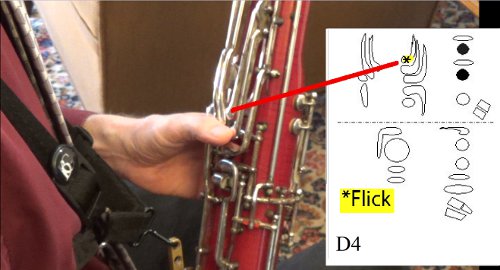
00:19D4 Flick Key
In Study #3, I presented fingerings for the flick keys. In this Study #4, we will use the flick, or vent, keys again. There is one additional flick key, however, for D4 (Re). Normally, when I tongue this D, I do not use the flick key. However, when slurring up to D4, the flick key is needed.
 Open full-size figure
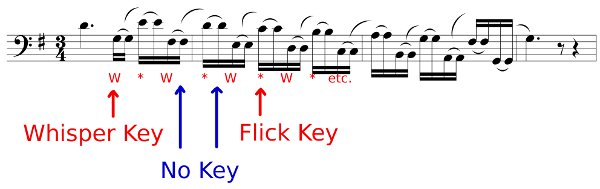
00:50Releasing the Whisper Key
In order to create a smooth slur, you will need to release the whisper (piano) key early. At first, you may find it helpful to practice the study like this:
 Open full-size figure
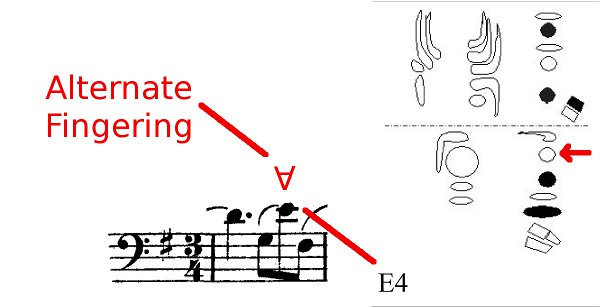
01:25E4 Slur
The slur to E4 (Mi) in measure 4 is best played by leaving off the first finger of the right hand.
 Open full-size figure
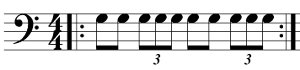
01:36Triplets and Duplets
The transition from triplets to duplets is difficult for some students. Practice this exercise to master evenly spaced notes.
 Open full-size figure
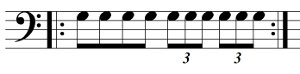 Open full-size figure
02:17Triplet Subdivision
The triplet entrance is further improved by subdividing the beat into triplets in your mind on the beat before the triplet notes. Example with triplet subdivision
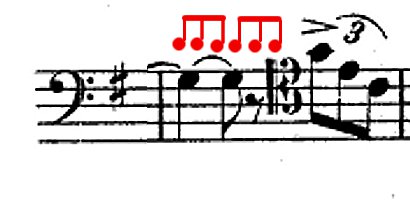 Open full-size figure
02:27Fermata
The general rule is to hold the note under the fermata twice as long. Thus, this quarter note should be held for approximately the duration of a half note.
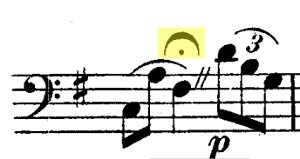 Open full-size figure
02:39Caesura ("Railroad Tracks")
The caesura indicates a pause or silence in the music. Informally, we call this "railroad tracks" in English.
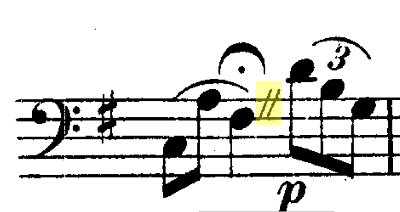 Open full-size figure
02:53Reflection
REFLECTION Then God saw everything that He had made, and indeed it was very good. (NKJV, Genesis 1:31) Sometimes when I play the bassoon, I simply enjoy the feeling of the instrument resonating in my hands. At times I even feel the sound vibrating throughout my body. There is such beauty that is possible with a musical instrument. It is very good! Be thankful for this wonderful and good gift.
Credits
- author Terry B. Ewell
- composer Julius Weissenborn