Practicing Weissenborn Study #5
Performance and practice suggestions for Julius Weissenborn's Bassoon Studies, Opus 8, Study #5
Comments
Practicing Weissenborn Study #5 (2014, BDP #113). The public domain music for Opus 8/2 – 50 Advanced Studies is available here: Music from IMSLP | Alternate PDF
The original transcript is available here.
Videos
Captions are unavailable. The complete transcript follows.
Chapters
Transcript
00:00Furioso
TUTORIAL Furioso means forceful and turbulent. This exercise should be played with a great deal of energy.
00:26Five Articulations
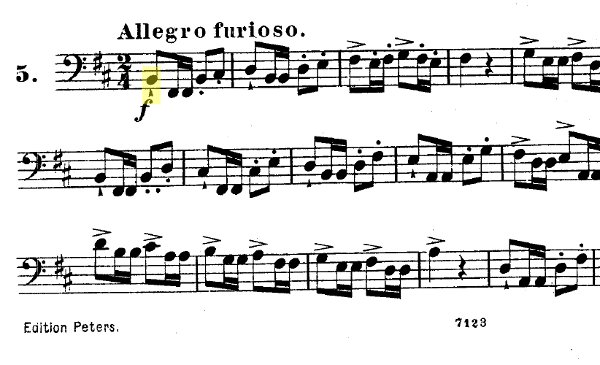
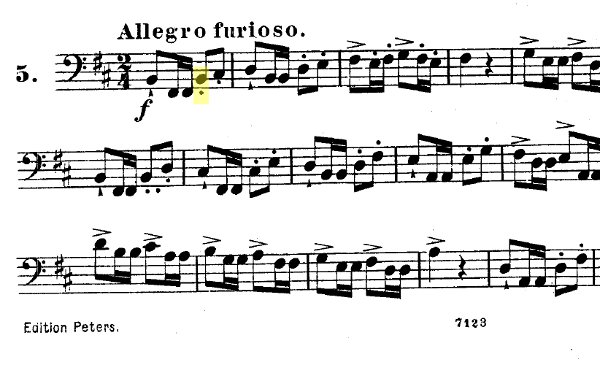
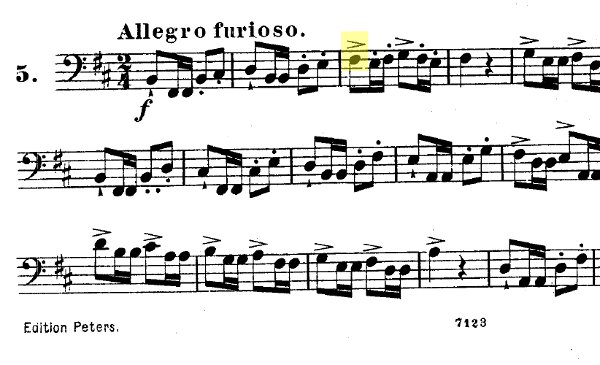
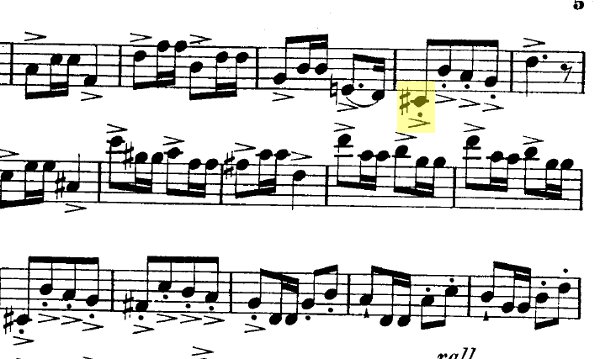
There are five articulations in this study, and each should be played differently. In the order they appear, they are: • Staccatissimo • No marking • Staccato • Accent • Accent with staccato
 Open full-size figure
 Open full-size figure
 Open full-size figure
 Open full-size figure
 Open full-size figure
00:54Staccatissimo versus Staccato
In this study, I prefer to play the staccatissimo notes not only shorter than the staccato notes, but also with an accent. I believe this better expresses the Furioso marking. The accented staccato notes should be separated and emphasized, but they should never be as short as the staccatissimo notes.
01:15Articulation Drives
Improve control of your tongue by practicing these articulation drives. Number 1 represents the shortest duration (staccatissimo), while number 5 represents the longest duration (legato tonguing). Example: Articulation Drives
01:34Reflection
REFLECTION And the LORD God said, "It is not good that man should be alone; I will make him a helper comparable to him." (NKJV, Genesis 2:18) Tending the garden is more enjoyable when others help. We all need the help and encouragement of others. Don't allow your practicing to make you a hermit! Be sure to share your talents and experiences with others.
Credits
- author Terry B. Ewell
- composer Julius Weissenborn