Practicing Weissenborn Study #11
Weissenborn Opus 8/2, Study #11 for advanced bassoon students. Practicing difficult finger patterns with short sprints. Further discussion of healthy practice methods. By Terry B. Ewell, Bassoon Digital Professor.
Comments
Weissenborn Opus 8/2, Study #11 for advanced bassoon students. Practicing difficult finger patterns with short sprints. Further discussion of healthy practice methods. By Terry B. Ewell, Bassoon Digital Professor. BDP #119.
The original transcript is available here.
Videos
Captions are unavailable. The complete transcript follows.
Chapters
Transcript
0:19Studies of Virtuosity
Hello, this is Terry Ewell. This study is misplaced in the collection of the 50 Advanced Studies. It is far too difficult to be Study No. 11. In Weissenborn's original edition of 60 studies, it was numbered 57 and placed in a section titled Studies of Virtuosity. It is one of the most difficult studies in the collection. Sprint Practice
0:51Sprint Practice
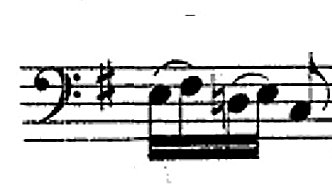
In addition to practicing with rhythms, you will also need to do sprints. A sprint is running very fast over a short distance. Likewise, in music I practice very small segments at extremely fast speeds. Connecting Practice Segments
 Open full-size figure
 Open full-size figure
1:27Connecting Practice Segments
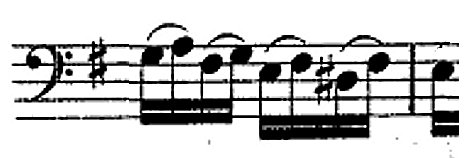
I then connect these smaller segments to form a larger segment.
 Open full-size figure
1:49Section
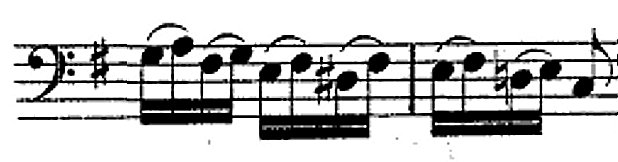
Each of these larger segments is then connected to create even longer sections. Practicing from the End
 Open full-size figure
2:07Practicing from the End
Notice that I begin practicing from the end of the segment rather than the beginning. Playing the ending more frequently gives me confidence that I will finish successfully. Endings are often the most difficult because our concentration has already been taxed by so many notes. Using this approach, I gradually work the entire study up to the faster tempo. Mental Strategies for Speed
2:33Mental Strategies for Speed
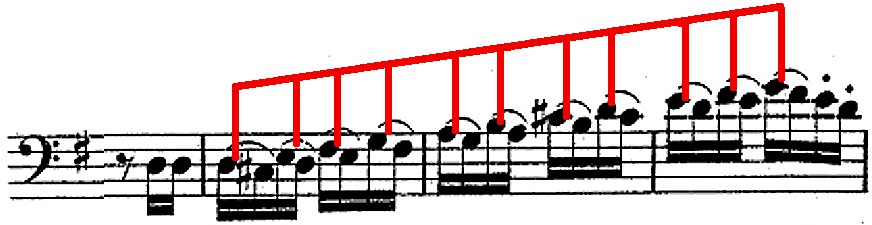
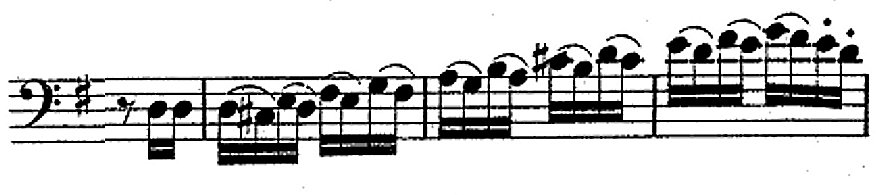
Playing rapidly is often not just a matter of good practice habits but also of developing the proper mental approach. The way you think about the notes can help you perform fast passages more effectively. In the last three measures of line three, I find it especially helpful to think only about the ascending scale—the first note of each group.
 Open full-size figure
3:07Section
I then concentrate on that scale, allowing my fingers to follow naturally through the descending notes. Even so, it remains a difficult passage, and I did not perform it perfectly at the end of this video. Alternate Fingerings
 Open full-size figure
3:28Alternate Fingerings
I use two alternate fingerings in this study. In line three, measure one, I use an alternate fingering for F♯4. For C♯4, I use only the left-hand fingering. Schumann Inspiration
3:47Schumann Inspiration
This study was inspired by a passage from Robert Schumann's Symphony in B-flat. Students should practice that passage as well. Shape the phrase by driving toward the accented C-sharp.
4:03Reflection
> "Vary the musical stress in each practice session. Don't concentrate on a single piece or passage for long intervals..." > > William J. Dawson, Fit as a Fiddle, p. 46
4:25Section
I have intentionally presented material on healthy practice habits in the previous reflections to prepare you for this study. If you have not read the reflections for Lessons 9 and 10, I encourage you to do so.
4:40Healthy Practice Habits
Healthy Practice Habits
5:50Endurance and Injury Prevention
Endurance and Injury Prevention
Credits
- author Terry B. Ewell
- composer Julius Weissenborn