Practicing Weissenborn Study #13
Weissenborn Opus 8/2, Study #13 for advanced bassoon students. Comments include playing on the wind, flicking, and alternate fingerings. By Terry B. Ewell, Bassoon Digital Professor. BDP #121.
Comments
Weissenborn Opus 8/2, Study #13 for advanced bassoon students. Comments include playing on the wind, flicking, and alternate fingerings. By Terry B. Ewell, Bassoon Digital Professor. BDP #121 • www.2reed.net
The original transcript is available here.
Videos
Captions are unavailable. The complete transcript follows.
Chapters
Transcript
Tutorial
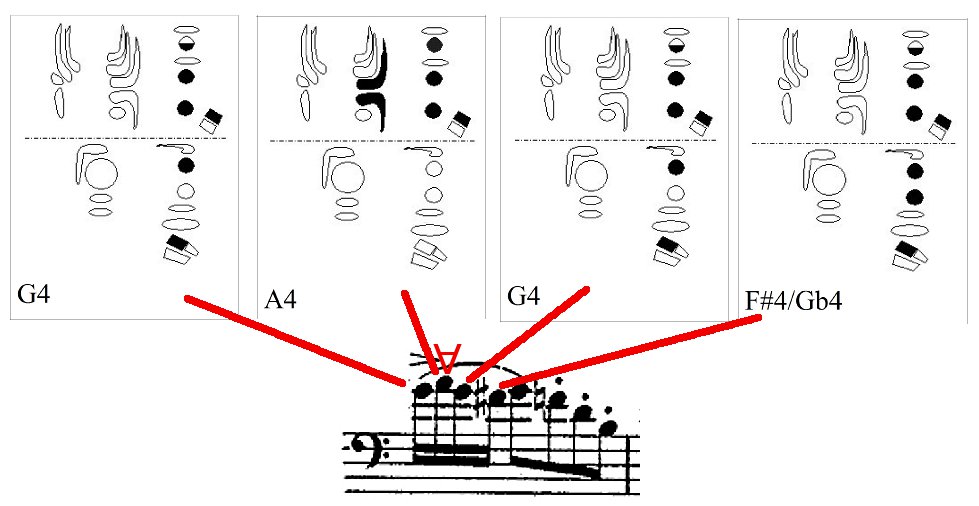
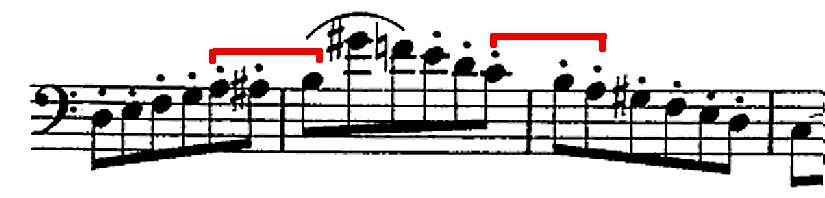
Welcome, this is Terry Ewell. Weissenborn Study #13 begins with a tongued run that is best played "on the wind." By this I mean that the player should provide the same air support and phrase shaping as if the notes were slurred. Avoid excessive jaw movement whenever possible. Instead, shape the length of the notes with the tongue. For further information on playing on the wind, please see Bassoon Digital Professor Video #56. https://www.2reed.net/bdp/home.html#bdp56 Avoid pulsing on the dotted quarter notes. Students often play them with unnecessary emphasis. Instead, the melodic line should remain smooth and uninterrupted without extra accents on the dotted notes. There are several common counting errors in this study. Be sure that the quarter note followed by the eighth rest in the first line is counted accurately. Also, do not add an extra beat after the A4 at the end of the second line. I use alternate fingerings to help perform the sixteenth-note passages in line three. Normally I play G4 with the whisper key depressed. Here, however, I leave the whisper key off so that I can move quickly to the left-hand-only fingering for A4. You can also view my standard bassoon fingerings here: https://www.2reed.net/EwellArticles/BsnFingerings.pdf The C flick key is best held down for repeated tongued notes in scales containing A3, B♭3, B3, and C4. For example, in line five, measures four through six, the C flick key should remain depressed to improve articulation as illustrated below. This technique is also used in the second measure of the study and in several other places. I also use the flick key for slurred intervals of a third or larger. For example, I flick the A3 at the end of line six. When Weissenborn places a fermata in the music, he generally implies a slight rallentando, or slowing down, before the fermata. Sometimes he writes this explicitly in the music, and sometimes he leaves it to the performer.
 Open full-size figure
 Open full-size figure
 Open full-size figure
 Open full-size figure
 Open full-size figure
 Open full-size figure
Reflection
> "Infinite striving to be the best is man's duty; it is its own reward. Everything else is in God's hands." > — Mahatma Gandhi The 2014 Winter Olympics in Sochi were concluding as I wrote this reflection. One of the greatest factors contributing to the excellence of elite athletes is the outstanding quality of their coaches. Many athletes travel to different parts of the United States—or even immigrate to other countries—to work with the finest coaches in their events. I am delighted that you have chosen to watch this video and the others in this series. I hope they provide you with excellent instruction. However, these videos alone are not enough. Seek out the very best teachers for your instrument and, indeed, the best coaches and mentors for your life. Do not settle for mediocrity. The Olympic spirit is characterized by striving for excellence through training with the very best.
Credits
- author Terry B. Ewell
- composer Julius Weissenborn