Weissenborn Study #49
Weissenborn Opus 8/2, Study #49 for advanced bassoon
Comments
Weissenborn Opus 8/2, Study #49 for advanced bassoon students. Fingerings for Eb5. Adjustments to the reed for high register playing on the bassoon. Guest performer Collin Walter. By Terry B. Ewell, Bassoon Digital Professor. BDP#157.
The original transcript is available here.
Videos
Captions are unavailable. The complete transcript follows.
Chapters
Transcript
0:19Eb5 in the High Register
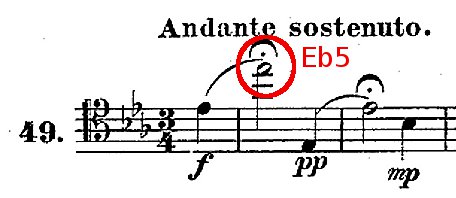
Welcome, this is Terry Ewell. Weissenborn Study #49 expands the range of the instrument to Eb5. This note, however, is a problematic pitch on the German system bassoon. It does not articulate well or respond well to large slurs.
 Open full-size figure
0:38Eb5 Fingering Possibilities
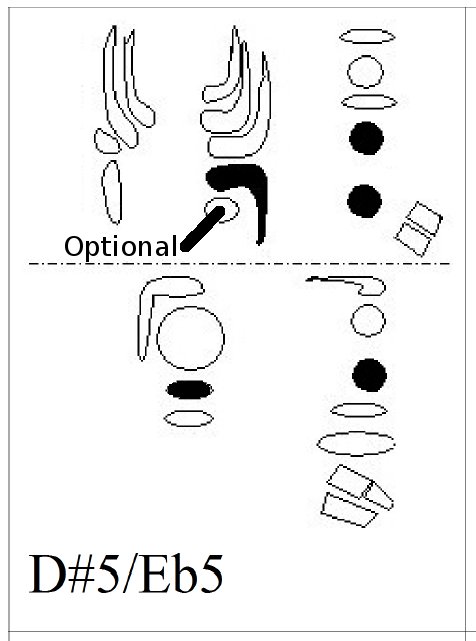
Let me leave you with several fingering possibilities for Eb5. Please be aware that none of them will perform as satisfactorily as fingerings for D5.
 Open full-size figure
 Open full-size figure
0:50Bassoon-Family Fingering Companion
You might find it helpful to look at the other suggestions listed in the Bassoon-Family Fingering Companion. http://www.idrs.org/resources/BSNFING/FINGHOME.HTM
0:59Trill Fingerings
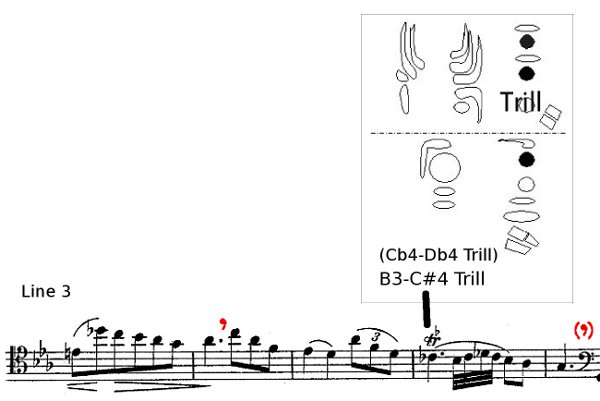
Here are fingerings for the trills presented in the study:
 Open full-size figure
1:11Mordent Fingerings
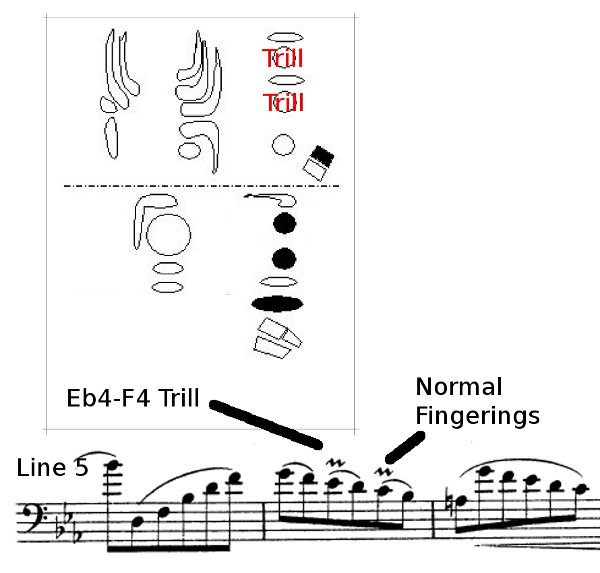
I perform the mordents in line 5 with these fingerings:
 Open full-size figure
Mordent Fingerings, continued
------------------------------------------------------------------------ # REFLECTION
1:20Reflection: Reeds for the High Register
Most performers find it helpful to use a reed adjusted for the high register to effectively perform this and the next study.
1:30Reed Finishing Resources
My videos on reed finishing (BDP# 86-91) present my concepts and suggestions for adjusting bassoon reeds. I encourage you to study them carefully and the companion article "A Pedagogy for Finishing Reeds for the German-System (Heckel-System) Bassoon." A link to the revised paper is available here: http://www.2reed.net/EwellArticles/ReedAdjustingNew.pdf
1:43Reed Finishing Article
Full reference: "A Pedagogy for Finishing Reeds for the German-System (Heckel-System) Bassoon," The Double Reed 23/3 (2000): 99-108.
1:55Smaller Reeds for Higher Pitches
Smaller reeds favor higher pitches. This is why an oboe reed is smaller than a bassoon reed, for instance. Creating a smaller bassoon reed will aid the higher notes. You can shorten the blade by cutting the tip.
2:23Cutting the Reed Tip
The poor man's way to cut the tip is to use scissors. The traditional way to cut the tip is to use a knife and cutting block. Use a different knife than the one you use for scraping, because cutting the reed tip will dull the knife.
2:42Narrowing the Blade
You could also narrow the blade.
2:54Narrow Throat
Also a narrow throat helps the high register.
2:58Rounding the First and Second Wires
In addition, rounding the first and second wires provides more tension in the blade and aids with the higher harmonics and the higher notes on the instrument.
3:11Heart-to-Wings and Spine-to-Rail Ratios
A high note reed also features a greater heart to wings ratio and a greater spine to rail ratio. Concepts of these ratios are detailed in my paper.
3:24Choosing Reed Adjustments
Depending on the style of your normal bassoon reed, you may not need to make all of the adjustments given above. Just two adjustments may be all that is required for you.
Credits
- author Terry B. Ewell
- composer Julius Weissenborn