Seventh Bassoon Lesson, Part 1
Dynamics and long tone exercises. By Terry B. Ewell.
Comments
Dynamics and long tone exercises. By Terry B. Ewell. BDP#195. www.2reed.net/bdp.
The original transcript is available here.
Videos
Captions are unavailable. The complete transcript follows.
Chapters
Transcript
0:00Introduction to Dynamics
Intro Music: "Home Sweet Home" from A Tune a Day, lesson 29 number 6.
0:14Section
Welcome! Well, generally this is the first point in the lesson plans that I begin talking about dynamics. I have a reason for delaying the talk about dynamics until the student is well established, understanding the fundamentals of air support, embouchure, and playing a good, healthy forte sound. That healthy forte sound is the "home base" (if you want to talk about that) for the other dynamics. If students don't understand proper support and an open embouchure, they will have difficult playing the quieter dynamics properly.
1:09A Healthy Forte Sound
Generally a good forte is with full air support, with the embouchure dropped, and more of an "ah" vowel. We will be talking about this later in our lessons.
1:24Long Tone Exercises with Dynamics
Now let's practice some long tone exercises with dynamics. We will start with forte, then diminuendo, and then crescendo back to forte. Let's set the metronome to 60, a beat equals 60. Let's practice this with three counts in each phase of the exercise.
 Open full-size figure
Long Tone Exercises with Dynamics, continued
Example: forte to piano to forte.
2:10Section
Now let me do the other exercise:
 Open full-size figure
Section, continued
Example: piano to forte to piano.
2:28Maintaining a Steady Pitch
The object of the exercise is to maintain a steady pitch throughout all of the dynamics.
2:38Expanding the Long Tone Exercise
When you have mastered three counts per measure, add another count---four counts. Then five, six, etc. throughout the range of the instrument so that you understand that every note on the bassoon is a little bit different.
2:56Long Tones on the Bocal and Reed
An even greater challenge than playing this exercise on the bassoon is playing it on a bassoon bocal with just the reed. This is well worthwhile practicing because it helps you to focus even more on embouchure and air balance. Let me again set my metronome to 60.
3:17Section
Let's again do this for three counts.
Open full-size figure
Section, continued
Example: forte to piano to forte.
3:37Section
And now starting piano and crescendoing.
Open full-size figure
Section, continued
Example: piano to forte to piano.
3:58Embouchure Adjustments for Dynamics
There are subtle differences that occur in my embouchure. Not only is my embouchure opening up for forte, but I find that my embouchure goes slightly closer to the wires for forte.
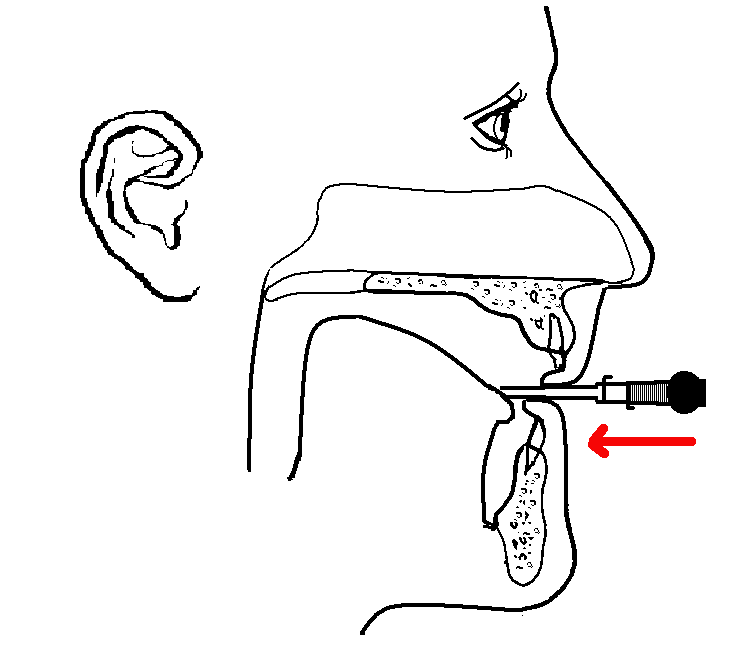 Open full-size figure
4:15Section
Then when I play piano the embouchure closes and I pull the reed out slightly.
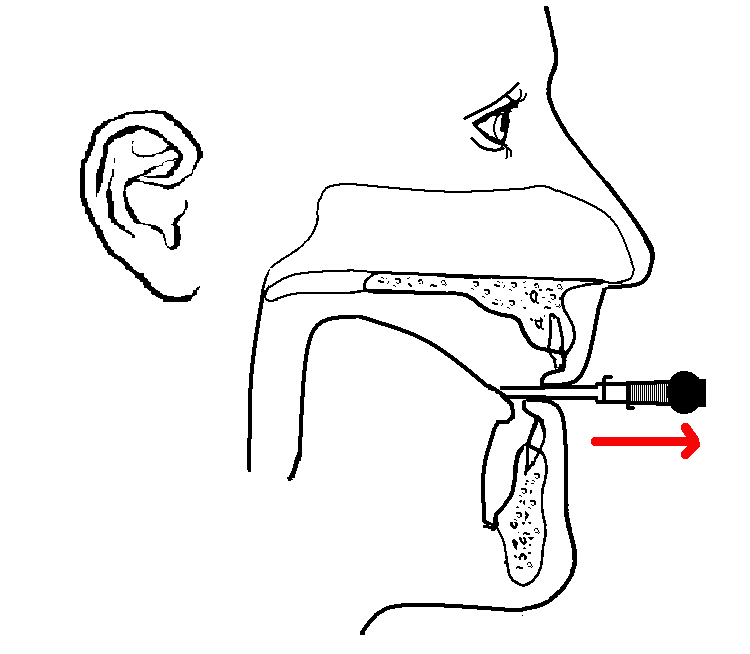 Open full-size figure
4:22Dynamics and Musical Gestures
Gaining mastery over dynamics will help you convey musical gestures. This will help you to play musically.
4:32Further Study of Phrasing
If you want to learn more about playing musically, please see my many videos on phrasing. Several of them are linked on my website 2reed.net. Phrasing
4:59Section
Closing Music: "Home Sweet Home" from A Tune a Day, lesson 29 number 6. ------------------------------------------------------------------------ Copyright (c) 2016 By Terry B. Ewell. All rights reserved.
Resources
References
- Reference: Terry B. Ewell, “Teaching the Beginning Bassoonist,” The Double Reed 23/2 (2000): 35–43.here
Credits
- author Terry B. Ewell