Practicing Weissenborn Study #9
Performance and practice suggestions for Julius Weissenborn's Bassoon Studies, Opus 8, Study #9
Comments
Practicing Weissenborn Study #9 (2014, BDP #117). The public domain music for Opus 8/2 – 50 Advanced Studies is available here: Music from IMSLP | Alternate PDF
The original transcript is available here.
Videos
Captions are unavailable. The complete transcript follows.
Chapters
Transcript
00:19Breathing and Musical Phrasing
Welcome, this is Terry Ewell. Study #9 presents many musical challenges. Perhaps the greatest challenge is coordinating breathing with musical phrasing. I encourage you to stop the video now and spend some time marking breaths in the music. Time spent doing this will prepare you to make better decisions in the future about where to breathe in music. By now you may have noticed in the previous videos that I have marked breaths in the music. Too often students do not consider where to breathe. Instead, they play until they make a mistake, breathe, then continue until the next mistake before breathing again. If practiced correctly, this study will force you to breathe only in musically appropriate places.
01:20Principles of Breathing
Let's establish some general principles for where to breathe. As wind players, we naturally need air in our lungs to play the instrument and avoid passing out. Beyond this physical need for air, however, we should also consider the musical placement of our breaths. 1. Breaths should coincide with musical phrasing whenever possible. 2. Place breaths in musically consistent locations. 3. As a last resort, breaths can be hidden between leaps or large intervals. I hope you have already examined Study #9 and identified the musical phrases.
02:29Phrase Structure
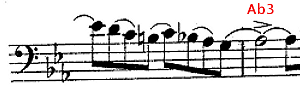
In Western music, phrase endings are often indicated by a descending melodic line, longer note values at the end of the phrase, and a harmonic cadence. Furthermore, in this study, repeated patterns also help identify phrase boundaries. The study begins with two gestures, each consisting of three eighth notes followed by a half note. Measure 3 then continues with eighth-note patterns until reaching an E♭4 half note, which descends to an A♭3 half note in the second measure of the second line. Many students are tempted to take their first breath after the E♭4 because, by that point, the lungs need more air. However, that is the worst possible place to breathe. The E♭4 is the climax of the phrase that began in measure 3 and is clearly not the end of the musical thought. The phrase concludes in the second measure of line 2. Two Gestures Opening and Beginning of Line 2
 Open full-size figure
 Open full-size figure
 Open full-size figure
03:21Dovetailing
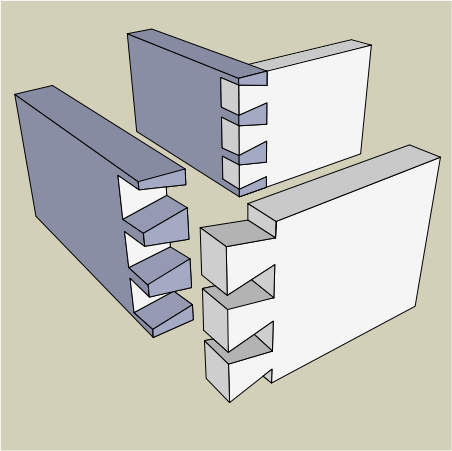
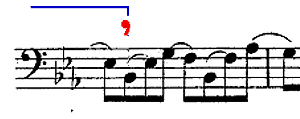
Complicating the issue is the musical technique known as dovetailing. Dovetailing occurs when the end of one melody overlaps with the beginning of another. The term comes from carpentry, where pieces of wood are joined together. Thus, the second measure of line 2 serves two functions: it is both the conclusion of the previous phrase and the beginning of the opening gestures.
 Open full-size figure
 Open full-size figure
04:15Additional Breathing Points
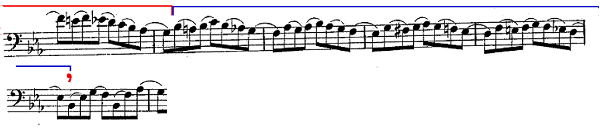
A breath is certainly possible after the A♭3 in line 2, measure 2, but I believe the better solution is to breathe after the second half note in line 2. For the sake of consistency, I also breathe after the second half note at the beginning of the study. The eighth-note pattern that begins in line 1, measure 3, is repeated one step higher in line 2, measure 3. This phrase ends on the downbeat of line 3, measure 2. A quick breath is appropriate there. A new musical pattern begins in line 3, measure 2. It is a sequence that continues to the top of the next page. Another quick breath should be taken at that point. Line 3 with Sequence Page 2 I will not comment further on breathing here, but I encourage you to study carefully the breath marks I have indicated in the music. Consider the musical decisions behind those choices.
 Open full-size figure
 Open full-size figure
 Open full-size figure
04:55Leggiero Style
Notice that staccato marks appear after slurs in the opening measures. Although they are not written throughout the remainder of the study, the leggiero character, with its light separation after slurs, should continue throughout the entire study.
05:13Reflection
"Play or practice only twenty-five minutes out of every thirty; get away from the instrument and do something else for the other five." (William J. Dawson, Fit as a Fiddle, p. 45) This is excellent advice. Personally, I practice in fifty-minute sessions followed by ten minutes of rest. This approach has served me well for many years. In addition, I often adjust my reeds during practice sessions, which provides further breaks from playing the instrument. Remember that being a musician is not a sprint— it is a marathon. Develop healthy practice habits that will serve you well for many years.
Credits
- author Terry B. Ewell
- composer Julius Weissenborn