Weissenborn Study #34
Weissenborn Opus 8/2, Study #34 for advanced bassoon
Comments
Weissenborn Opus 8/2, Study #34 for advanced bassoon students. Suggestions for fingerings. Overview of 2reed.net. Discussion of embouchure positions. By Terry B. Ewell, Bassoon Digital Professor. BDP #142.
The original transcript is available here.
Videos
Captions are unavailable. The complete transcript follows.
Chapters
Transcript
0:19Introduction and Steady Subdivision
Welcome, this is Terry Ewell. Weissenborn study #34 is another perpetuum mobile study that tests the student's finger technique. However, one of the most difficult parts for students is holding the half note for full value and counting out the half note rest. Subdivisions of eighth notes will help to keep the tempo steady.
0:47Practicing Rapid Notes with Sprints
I have mentioned techniques for practicing rapid notes in earlier studies. Please refer to the videos on studies 11, 14, 16, and 27. Sprints in particular will help you to develop rapid, even, and smooth fingerings.
1:04Alternate Fingerings for E4 and C#4
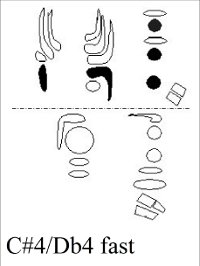
In line 4 I do not use an alternate fingering for E4. This is not too fast to use the regular fingerings for D4 and E4. I do, however, use the fast or short C#4 fingering here and throughout most of the study.
 Open full-size figure
 Open full-size figure
1:19Fast D#3 Fingering
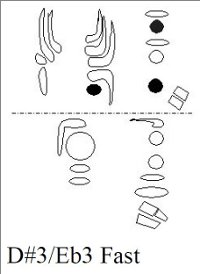
In line 7 I make use of the fast D#3 fingering to simplify this passage.
1:33Alternate F#4 and E#4 Fingerings
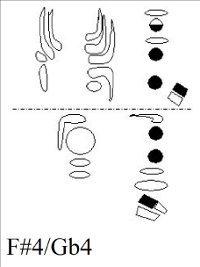
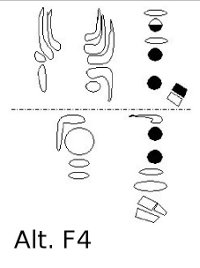
One last alternate fingering that is very helpful for this study is found in the second to last line, line 11. I start with my normal F#4 fingering, move to this alternate E#4 (F4) fingering and then proceed with the passage as normal.
 Open full-size figure
 Open full-size figure
1:49Overview of 2reed.net
Let me conclude this pedagogy portion of the video with a brief overview of the resources I have provided on 2reed.net. This is a website I maintain for you. It mostly contains my materials, but there are a few contributions from my other colleagues. In addition, there are links to many other resources available on the Internet.
2:19Resources on the 2reed.net Home Page
This is the top of the home page for 2reed.net. Important links for you are on the left and top of the page. There is information on auditions, careers, life and health, performance, practicing, reed making, and teaching. The "Awesome things" link provides many free materials.
2:35Section
At the top are links to free music and ringtones I created, and a few music quizzes I have used in my courses at Towson University.
2:48Section
Here are the links to drones and fingerings. There are also materials on the site for Korean and Chinese speakers.
3:00Bassoon Digital Professor
The area of the site that might interest you the most is the Bassoon Digital Professor. You can access this site directly with this address: www.2reed.net/bdp
3:14Section
Here is the top of the home page for the Bassoon Digital Professor. It contains the links we observed on the other page. However below the title you will see links to listings of the BDP videos in order.
3:32BDP Video Listings
Here, for instance, is a portion of the listing in the first 100 videos. You will find there a summary of the videos, a YouTube link if the video is posted there, and a link to the videos and materials on my website. Let's return to the Bassoon Digital Professor main page.
3:55Recommended Study Sequence and Topics
Further down the page I have provided a recommended sequence of study and also a topical listing of the videos. This will help you to further find materials that interest you at the time.
4:07Additional Materials on 2reed.net
You may be watching this video on YouTube. 2reed.net, however, provides many additional materials not available on YouTube. For instance, on 2reed.net each video is provided in multiple formats for ease of viewing and saving on your devices. I have provided transcripts with many of my videos which may be helpful for further study or translation into other languages. There are also links to other study materials.
4:34Free Resources and Ministry
I am sorry that 2reed.net is only periodically updated. I wish I had more time to spend on it, but I have prioritized other items such as producing the Weissenborn videos more highly. You will notice that most of my materials are presented free of charge. Since I consider it a ministry, I don't receive payment from advertisements on the website or with my videos. I hope that you will find this resource helpful as you continue to grow as a musician and person. ------------------------------------------------------------------------ # REFLECTION
5:07Reflection: Musical Expression and Tone Color
One of the goals I have as a performer is to gain the skills that will allow for greater expression in music. I think this is a bit similar to being a painter. Painters want access to as many colors as possible. Being limited to just one or two colors would stifle creativity. Similarly I want as many expressive tools as possible to choose from when I perform. Then I can choose the right "color" for the moment.
5:45Embouchure Placement and Tone Color
Embouchure placement plays an important role in tone color on the bassoon. Let me draw out a few ideas from an article I wrote called, "Double Reed Embouchures" which is published in Celebrating Double Reeds: A Festschrift for William Waterhouse and Philip Bate.
6:08Typical Bassoon Embouchure
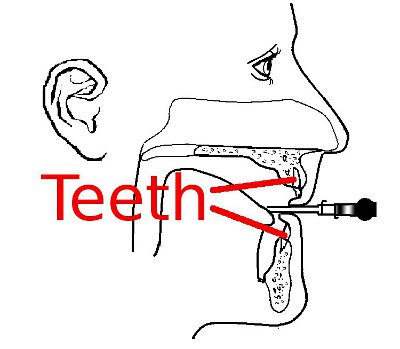
Here is an example of a typical embouchure on bassoon:
 Open full-size figure
6:12Section
Notice that the lips cushion the reed over the teeth. The teeth don't contact the reed at all.
 Open full-size figure
6:22Parallel Embouchure Positions
Parallel Embouchure Positions I mentioned in the video on Weissenborn #26 that the parallel embouchure helps with downward slurs and rapid shifts between registers on the bassoon. There are, however, multiple parallel embouchures that are possible on the bassoon reed.
6:41Reed Placement and Tone Color
The further the reed extends into the mouth the more reed blade surface vibrates. More vibrating area means more sound. In addition, changes in the amount of the reed blade vibrating will change the timbre or sound quality. Lots of reed in the mouth such as in 1A provides a more raucous, nasal, or vibrant sound. Less reed in the mouth such as 1C will yield a dampened and darker sound. Since 1A gives a larger opening on the reed more air is needed to support the sound.
7:24Embouchure Placement and Intonation
Also the intonation will change with these embouchures! Embouchure 1A tends to give a sharper pitch (when supported with air) than 1C. Pulling the reed out of the mouth lengthens the bore of the instrument resulting in slightly lower pitch.
7:38Normal Offset Bassoon Embouchure
The normal bassoon embouchure is slightly offset since the lower teeth are behind the upper teeth.
 Open full-size figure
7:51Offset Embouchure Positions
Offset Embouchure Positions The amount of reed in the mouth in the offset embouchure also determines the sound quality and to some extent the pitch.
8:01Osborne's Rhapsody and Embouchure Placement
I talk further about embouchure placement in my video on Osborne's Rhapsody, part 1, BPD #104.
8:10Future Discussion of Embouchure Placement
God willing I will discuss embouchure placement further in my future video on Weissenborn study #50. ------------------------------------------------------------------------
Credits
- author Terry B. Ewell
- composer Julius Weissenborn