Weissenborn Study #47
Weissenborn Opus 8/2, Study #47 for advanced bassoon
Comments
Weissenborn Opus 8/2, Study #47 for advanced bassoon students. Phrase like a thrown baseball (Joseph Robinson). Quote from Your Brain on Music. Guest performer Collin Walter. By Terry B. Ewell, Bassoon Digital Professor. BDP #155.
The original transcript is available here.
Videos
Captions are unavailable. The complete transcript follows.
Chapters
Transcript
0:18Shaping Musical Motion with Subdivisions
Welcome, this is Terry Ewell. The first phrases of Weissenborn study #47 give us another crucible in which to refine our expressive abilities. In particular, the quarter notes can halt or distort musical motion if subdivisions are not shaped into a musical line.
0:42Tonguing Each 16th Note
Let me first perform this by tonguing each 16th:
 Open full-size figure
1:04Continuing Motion Through Quarter Notes
Notice that I am continuing the musical motion through the quarter notes. You can only do this with subdivisions.
1:13The Baseball Toss Analogy
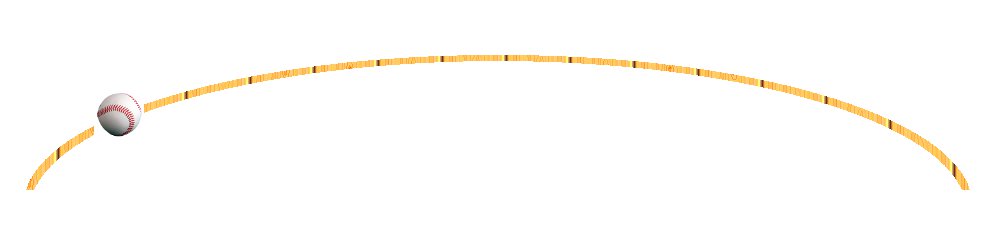
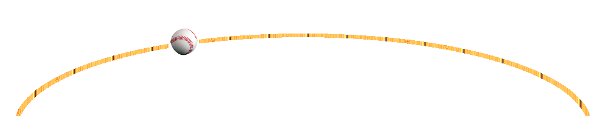
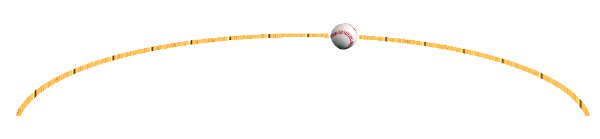
Let's use another analogy, the toss of a baseball. I am grateful to Joseph Robinson for this analogy. When a baseball is thrown, gravity causes the ball to curve in an arc as it approaches the ground. If we blink while the baseball is in the air, the motion still continues. Over years of practice with throwing baseballs you probably can guess where the baseball will be after you blink. Even though part of the motion is obscured briefly, the trajectory of the ball has already been determined. You understand where it will end up.
 Open full-size figure
 Open full-size figure
 Open full-size figure
1:56Musical Motion Through Quarter Notes
Likewise the musical motion continues through the quarter notes even though that motion is not audible. It is similar to blinking when looking at the toss of a baseball. The arch of the musical line should continue and be predictable.
2:14Appoggiaturas
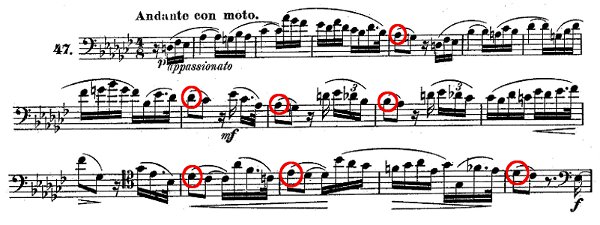
We also find in this study appoggiaturas. I spent considerable time in Weissenborn study #38 (BDP #146) discussing this important ornament and how it is often used for goals in music. Notice the abundance of appoggiaturas in this study!
 Open full-size figure
2:36Directing Musical Motion to Appoggiaturas
Not only is each appoggiatura placed on a downbeat, which provides some stress, but they are also approach by quicker notes. Quick notes generally move to longer notes in music, so you should direct the musical motion to the appoggiaturas. ------------------------------------------------------------------------ # REFLECTION
2:56Reflection: Music and Human Nature
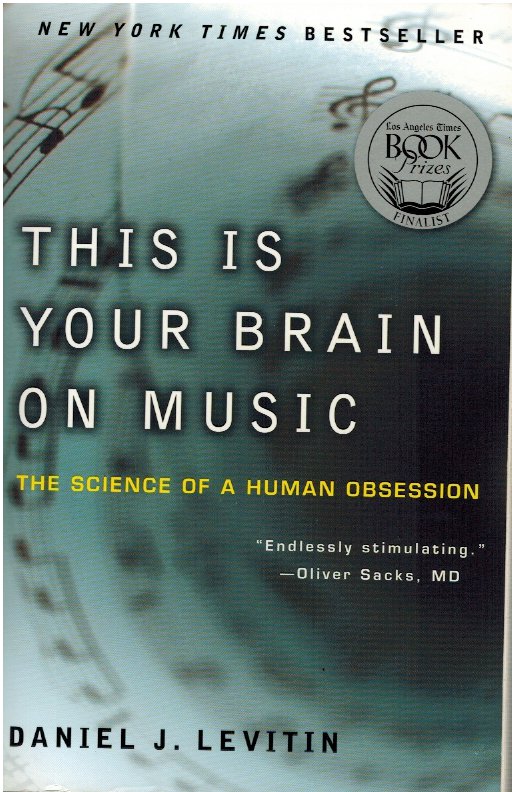
"Two concert tickets can easily cost as much as a week's food allowance for a family of four, and one CD costs about the same as a work shirt, eight loaves of bread, or basic phone service for a month. Understanding why we like music and what draws us to it is a window on the essence of human nature." Daniel J. Levitin, This is Your Brain on Music (London: 2007, Penguin Group), p. 7.
3:23This Is Your Brain on Music
I highly recommend that you read the book by Daniel Levitin titled, This is Your Brain on Music. He provides fascinating insights into how our brains process music. I really appreciate the last portion of the quote I read above. Indeed, it is true that there is something about music that is tied to the essence of human nature. We are privileged as musicians to be a part of this essence every day we live.
 Open full-size figure
Credits
- author Terry B. Ewell
- composer Julius Weissenborn